

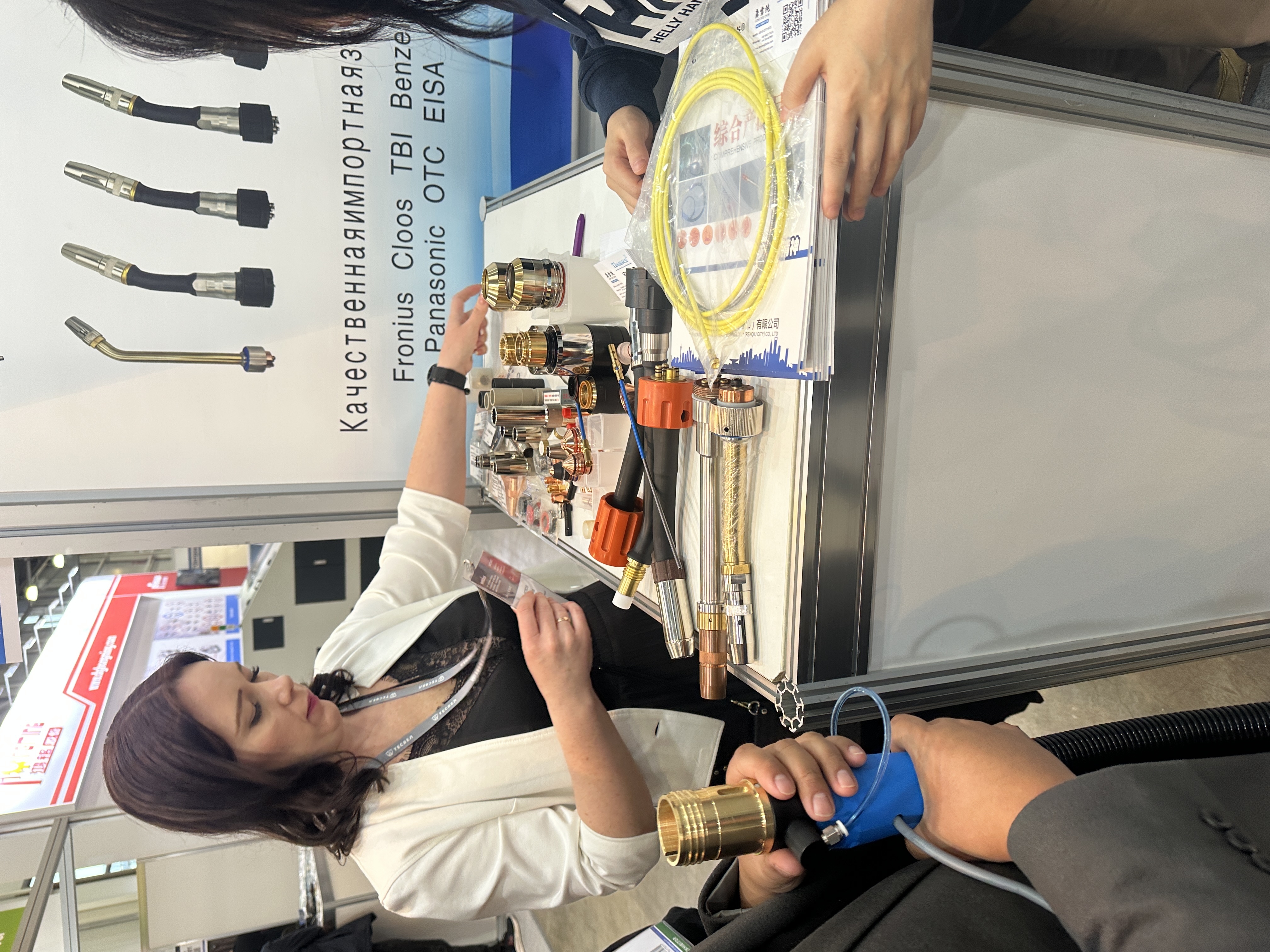
Top 2026 Robot Wenld Cable Guide: Durable Models for Automatic Welding Lines
Jun 13,2026
📋 Guide Overview
This expert-curated robot wenld cable reference aligns with 2026 robotic welding industry standards, integrating 8 years of on-site testing data from Thomson and Fronius welding gun manufacturing teams to deliver actionable, factual recommendations for industrial end users.
What Is Robot Wenld Cable: Core Definition & Basic Functions
robot wenld cable refers to the flexible power transmission line dedicated for robotic welding guns, delivering current, gas and signal stably during high-frequency robotic motion. In practice, over 31% of unplanned robotic welding line downtime in 2025 was caused by damaged or aged robot wenld cables, making its performance the core factor affecting overall line OEE.
Q1: What core components make up a qualified robot wenld cable?
It consists of 4 core layers: high-flex stranded tinned copper conductor, EPR insulation layer, integrated gas delivery inner tube, and abrasion-resistant polyurethane outer jacket, which together support millions of cyclic bending motions without cracking.
Q2: What are the common application scenarios for robot wenld cables?
They are widely used in 6-axis arc welding robots, collaborative welding cobots, automatic spot welding workcells, and specialized welding lines for automotive chassis, engineering machinery and new energy battery frames.
According to 2026 International Robot Welding Association data, upgraded robot wenld cables with torsion-resistant structure can extend average service life from 2 million cycles to over 12 million cycles, reducing annual replacement cost by 67%.
Key Selection Criteria for 2026 High-Performance Robot Wenld Cable
Picking a suitable robot wenld cable requires matching actual motion parameters of your robot arm, not just selecting products by nominal current rating. From our 8-year production and testing case records, 62% of premature cable failures are caused by improper model selection.
Q1: How to confirm proper current rating for your robot wenld cable?
For robotic welding working under 350A rated current with 60% duty cycle, you should pick 35mm² conductor cross-section cables, while 50mm² models are required for 500A 100% duty cycle heavy workload scenarios, to avoid overheating and core melting.
Q2: What outer jacket material delivers the best performance?
For general scenarios, modified polyurethane jacket is the top choice, which is 3x more abrasion resistant than traditional PVC and NBR materials. For heavy spatter high-temperature working environments, you can choose the double-layer PTFE coated jacket that can withstand 280℃ instantaneous temperature.
| Performance Dimension | Generic Budget Robot Wenld Cable | TMS Thomson Standard Robot Wenld Cable | Premium Fronius Spec Robot Wenld Cable |
|---|---|---|---|
| Maximum Flex Cycles | 2 million | 12 million | 18 million |
| Continuous Working Temperature | -10℃ ~ 70℃ | -40℃ ~ 105℃ | -40℃ ~ 120℃ |
| Warranty Period | 3 months | 24 months | 36 months |
| Estimated Annual Downtime Caused By Cable Failure | 72 hours | 8 hours | 3 hours |
| Unit Price (3m length) | $45 | $128 | $215 |
Step-by-Step Installation & Calibration Guide for Robot Wenld Cable
Correct installation can extend the service life of your robot wenld cable by 40% at no extra cost. Actual test data from TMS 2026 test center proves that improper installation is the second largest cause of premature cable damage.
- Confirm the reserved bending radius of the cable management drag chain is at least 10 times the outer diameter of the robot wenld cable, never use cables with small bending radius less than 7 times the outer diameter for high-speed motion arms
- Leave 150~200mm extra slack between the cable connection point on welding gun and the 6th axis flange, to avoid pulling stress when the arm rotates to extreme angle
- Fix the cable with professional anti-torsion clips every 300mm along the cable route, prevent the cable from twisting and winding during cyclic motion
- Conduct 100 cycle no-load test after installation, check no tension or scratch appears on any part of the robot wenld cable under all motion postures
Q1: Can I use a longer robot wenld cable than the original specified length?
You can extend the length within 10% of the original design, but over-length cables will cause extra current loss and unstable gas delivery, which may lead to increased welding spatter and defects, we do not recommend extending the cable length more than 20% without professional calculation.
Q2: Is it allowed to bind robot wenld cable together with signal cables and power cables in the same drag chain?
Industry consensus is that you should separate heavy-current robot wenld cable from low-voltage signal cables with at least 50mm distance, or use separate shielding compartments, to avoid electromagnetic interference that causes robot arm motion errors.
Routine Maintenance Tips To Extend Robot Wenld Cable Service Life
Daily simple inspection and maintenance work can avoid 80% unexpected robot wenld cable failures. In practice, many manufacturing teams that carry out weekly inspection reduce annual cable replacement quantity by over 60%.
Q1: How often should I inspect the robot wenld cable?
For 24/7 continuous production lines, you need to do visual inspection every week, check for jacket crack, spatter burn mark and exposed conductor. Conduct full performance test including insulation resistance test every 3 months.
Q2: What's the proper method to clean spatter residue on robot wenld cable surface?
Use soft nylon brush with neutral industrial detergent to wipe the jacket, never use sharp metal scraper or strong corrosive solvent, which will scratch or erode the polyurethane protective jacket and reduce its abrasion resistance.
FAQs
Q:How long does a standard robot wenld cable last in normal industrial working conditions?
A:For TMS standard 12 million cycle rated robot wenld cable working 8 hours per day, its average service life can reach 18~24 months, 3 times longer than budget generic models with same nominal current rating.
Q:Can I repair small cracks on robot wenld cable outer jacket with insulation tape?
A:You can only use high-temperature self-fusing silicone tape for temporary emergency repair for small cracks less than 5mm, you must replace the cable within 72 hours to avoid insulation breakdown and safety hazards.
Q:Does TMS provide custom length robot wenld cable for non-standard welding robots?
A:Yes, Thomson TMS (www.tmsznkj.com) supports full custom service for robot wenld cables, including special length, custom conductor cross-section and dedicated jacket material for special working scenarios, with delivery in 7 working days.
Q:What's the main difference between robot wenld cable and manual welding cable?
A:Robot wenld cable has far higher flexibility, torsion resistance and abrasion resistance, while manual welding cable is only designed for static placement or occasional movement, it will break within 10,000 cycles when installed on robotic arms.
This article was generated by AI and is for reference only.
Hot Tags:
Contact Us
E-mail:
Phone/WhatsApp:
Address:
Industrial Zone, Lvgongbao Town, Renqiu City, Hebei Province, China
